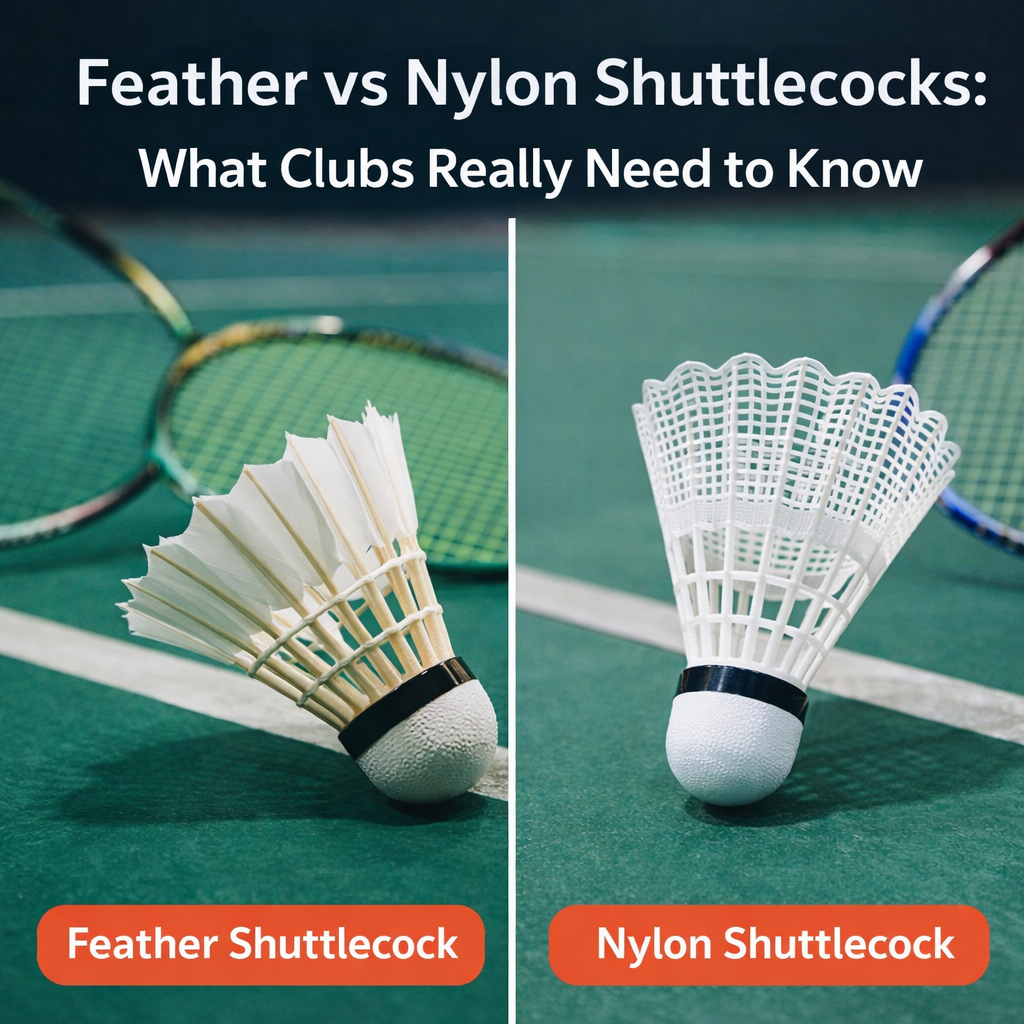
Feather vs Nylon Shuttlecocks: What Clubs Really Need to Know
Contents
For badminton clubs, choosing between feather and nylon shuttlecocks is not just about preference—it directly impacts training quality and cost control.
From real coaching experience, the answer is not “which is better”, but:
👉 which is better for your players and training system
1. Feather Shuttlecocks – Real Game Experience
Feather shuttlecocks provide:
- Natural flight trajectory
- Better drop and control
- More accurate timing
This is why:
- All professional matches use feather shuttlecocks
- Advanced players prefer them
However:
Cons:
- Lower durability
- Higher cost
- Sensitive to environment (humidity, temperature)
2. Nylon Shuttlecocks – Training Efficiency Tool
Nylon shuttlecocks offer:
- Very high durability
- Stable performance over time
- Lower cost per session
They are ideal for:
- Beginners
- Group training
- Repetitive drills
But:
Cons:
- Less realistic flight
- Reduced control feedback
3. What Most Clubs Get Wrong
Many clubs choose:
- Only feather (too expensive)
- Only nylon (hurts player development)
👉 Both approaches are suboptimal.
4. Recommended Strategy (Used by Good Clubs)
A balanced system:
- Nylon shuttlecocks → drills, warm-up
- Feather shuttlecocks → match simulation
This gives:
- Cost control
- Better training quality
- Proper player development
5. From a Coach’s Perspective
Players improve faster when:
- They train with correct flight behavior
- They experience real match conditions
👉 That requires feather shuttlecocks at the right stage.
✔ Final Advice
Don’t choose based on price alone.
👉 Choose based on:
- Training structure
- Player level
- Long-term development
Share this article
Need help sourcing badminton products from China?
If you are looking for a practical sourcing partner with badminton and export experience, feel free to get in touch.
You May Also Like